
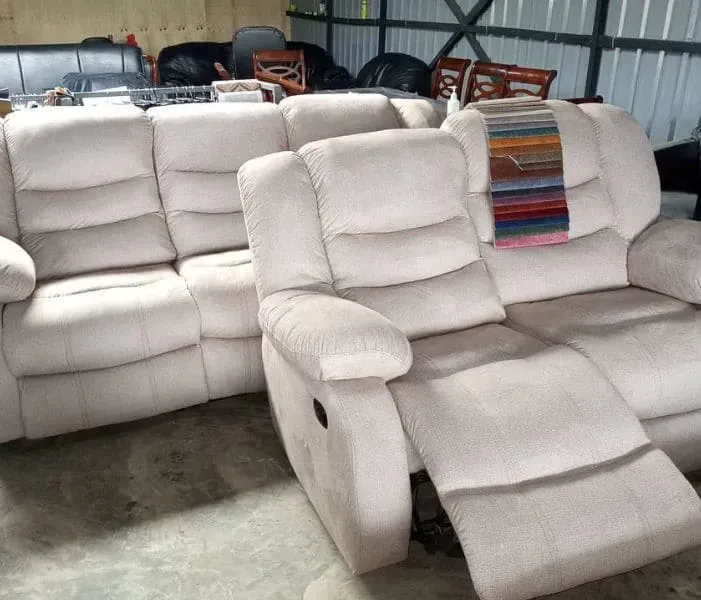
If your sofa’s frame is solid but the fabric is torn, faded, or stained, reupholstery is almost always cheaper than buying new furniture — often by a significant margin. But the exact cost varies depending on several factors that many people don’t consider before requesting a quote. This guide breaks down exactly what determines pricing, so you know what to expect.
Why Reupholstery Makes Financial Sense
A well-built sofa frame — especially older, solid hardwood frames common in many Nairobi homes — can easily outlast two or three “new” budget sofas from furniture showrooms. Reupholstery lets you keep that quality frame while completely refreshing the look, comfort, and lifespan of the piece. In many cases, clients pay roughly a third to half of what a comparable new sofa would cost, while ending up with furniture built to a higher original standard than most current mass-produced options.
The Main Factors That Affect Cost
1. Fabric Type and Quality
This is usually the single biggest cost driver. Options range from basic woven fabrics to premium imported textiles and genuine leather. Leather reupholstery costs considerably more than fabric due to material price and the specialised skill required to work with it cleanly. If budget is a concern, we can recommend durable mid-range fabrics that balance cost and longevity well.
2. Size and Type of Furniture
A single armchair takes less fabric and labour than a 3-seater sofa, and an L-shaped sectional costs more still. Dining chairs and office chairs are priced differently again, usually per unit, since the process is faster per piece even though there may be more pieces involved.
3. Frame and Structural Condition
If we open up the piece and find weakened joints, broken springs, or frame cracks, repairing these adds to the total — but it’s disclosed and quoted separately before we proceed, and it’s still typically far cheaper than the piece failing later or having to be replaced entirely.
4. Design Complexity
Simple, straight-lined sofas are quicker to reupholster than pieces with deep tufting, curved arms, piping, or decorative stitching. More intricate designs require more skilled hours, which is reflected in the quote.
5. Foam and Cushioning
If your cushions have gone flat or lumpy, refilling or replacing the foam is usually recommended alongside reupholstery — it’s a relatively small additional cost that makes a large difference in comfort.
What a Typical Process Looks Like
- Send photos or bring the piece in for an initial assessment.
- Receive an itemised quote covering fabric, labour, and any structural repairs.
- Choose your fabric from available swatches, or bring your own.
- Work begins — timelines depend on complexity, typically ranging from a few days to just over a week for larger sectional pieces.
- Collection or delivery of the finished piece.
Frequently Asked Questions
Can I supply my own fabric?
Yes. If you have fabric you’d prefer to use, we’re happy to work with it — just confirm the quantity needed based on your piece.
Is it cheaper than buying new furniture?
In most cases, yes — particularly for solid-frame furniture. Budget new sofas often use weaker frames and lower-density foam that won’t match the original quality of an older, well-built piece.
How do I get an accurate quote?
The most reliable way is to send clear photos of your piece via WhatsApp, along with any specific concerns (torn areas, sagging, squeaking). We’ll follow up with questions if needed and provide a detailed quote.
Get an Honest Quote Today
Every piece is different, and the only way to get an accurate price is a proper assessment. Send us a photo of your sofa on WhatsApp and we’ll get back to you with a transparent, itemised quote — no obligation, no pressure.